
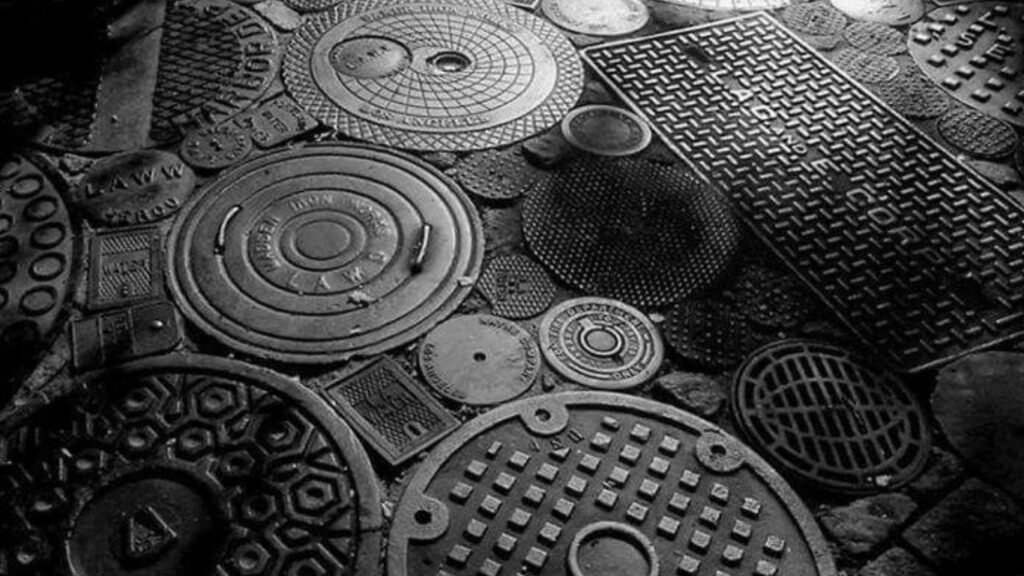
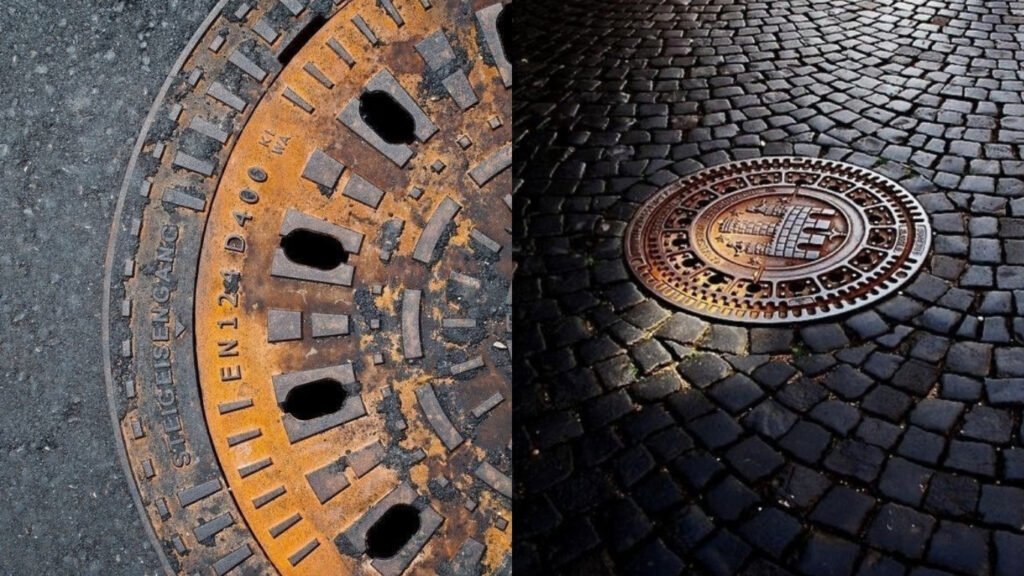
Walk through any city in Europe, Budapest, Vienna, Berlin, Paris and look down. The manhole covers beneath your feet are almost certainly made of cast iron. Most of them have been there for decades. Some for over a century. And they are still performing exactly as designed.
In an era of advanced composite materials, high-strength polymers, and precision engineered alternatives, this might seem surprising. Why does cast iron still dominate one of the most demanding applications in civil infrastructure where covers must withstand daily vehicle loads, temperature extremes, and decades of continuous service with minimal maintenance?
This guide answers that question. It explains what makes cast iron uniquely suited to manhole covers and drainage systems, how it compares to modern alternatives, what European standards require, and why procurement managers and engineers across Europe continue to specify it for new and replacement projects.
Key Takeaway
Cast iron has been the material of choice for urban infrastructure drainage for over 150 years not out of tradition, but because its combination of load bearing strength, durability, longevity, and compliance with European standards remains unmatched by any single alternative material at scale.
What We Cover in This Guide
- A brief history: how cast iron became the infrastructure standard
- What makes cast iron ideal for manhole covers?
- Cast iron in drainage systems: performance characteristics
- The EN 124 standard: what it requires and why it matters
- Cast iron vs alternatives: an honest comparison
- Load classes explained: choosing the right specification
- Limitations of cast iron and how they are managed
- Procurement considerations for B2B buyers
- Frequently asked questions
1. A Brief History: How Cast Iron Became the Infrastructure Standard
Cast iron entered urban infrastructure in the early 19th century, when rapidly expanding European cities needed a material that could handle the weight of horse drawn carriages, industrial machinery, and eventually motor vehicles while covering underground sewer and utility networks that were themselves expanding at pace.
The material proved immediately well-suited to the application. Cast iron is rigid, heavy, and corrosion resistant enough to survive underground environments for generations. It can be cast into precise shapes frames, grates, covers without machining. And it is available in virtually unlimited quantities from standard iron casting foundries.
By the late 19th century, cast iron drainage infrastructure was standard across Europe. The manhole covers installed in many European cities during that era are, in many cases, still in service today a testament to the material’s longevity that no marketing claim can replicate.
Historical Context
Some cast iron sewer and drainage infrastructure installed in European cities during the 1880s and 1890s continues to function today over 130 years later. No alternative material used in infrastructure has yet demonstrated a comparable real world lifespan at scale.
2. What Makes Cast Iron Ideal for Manhole Covers?
The properties of cast iron align closely with what manhole cover applications demand. This is not coincidence the material was selected because it works, and it has been retained because nothing else has yet matched its combination of characteristics at comparable cost and scale.
Load Bearing Strength
Cast iron manhole covers are manufactured to comply with EN 124 load classes that range from A15 (pedestrian areas, 15 kN test load) to F900 (airports and heavy industrial zones, 900 kN test load). The material’s rigidity allows it to distribute vehicle loads across the frame without deformation critical for covers installed in roads carrying heavy goods vehicles.
Unlike composite materials, cast iron does not creep under sustained load. A cover that meets D400 specifications when installed will continue to meet those specifications twenty years later, assuming no physical damage.
Dimensional Stability
Cast iron maintains its shape and dimensions across a wide temperature range. In climates where temperatures swing between -20°C and +40°C common across Central and Eastern Europe cast iron covers expand and contract predictably without losing their fit in the frame. This dimensional stability prevents the rocking, rattling, and noise that are common complaints with poorly fitted or dimensionally unstable covers.
Weight as a Safety Feature
The weight of cast iron which is often cited as a disadvantage is actually a safety feature in drainage applications. A heavy cover is harder to remove without tools, which reduces theft and unauthorized access to underground infrastructure. It also stays in place under the pressure of fast moving floodwater, which lighter composite covers may not.
Natural Skid Resistance
Cast iron covers are typically manufactured with raised patterns or ribbing on the upper surface. These patterns provide natural skid resistance for pedestrians and cyclists, reducing slip risk in wet conditions. The pattern is integral to the casting it does not wear off over time the way applied coatings do.
Longevity Under Traffic
Cast iron is highly resistant to abrasion from vehicle tyres and does not degrade under repeated impact loading. A cover installed in a busy urban road can absorb millions of vehicles passes over its lifetime without structural degradation, provided it is correctly specified and installed.
Why Weight Matters for Security
Manhole cover theft is a real and significant problem in urban infrastructure stolen covers create serious safety hazards and costly emergency repairs. Cast iron covers, weighing between 40 and 80 kg depending on size and class, are significantly harder to remove without equipment than composite alternatives. This is a procurement factor that is often overlooked in material comparisons focused only on installation cost.
3. Cast Iron in Drainage Systems: Performance Characteristics
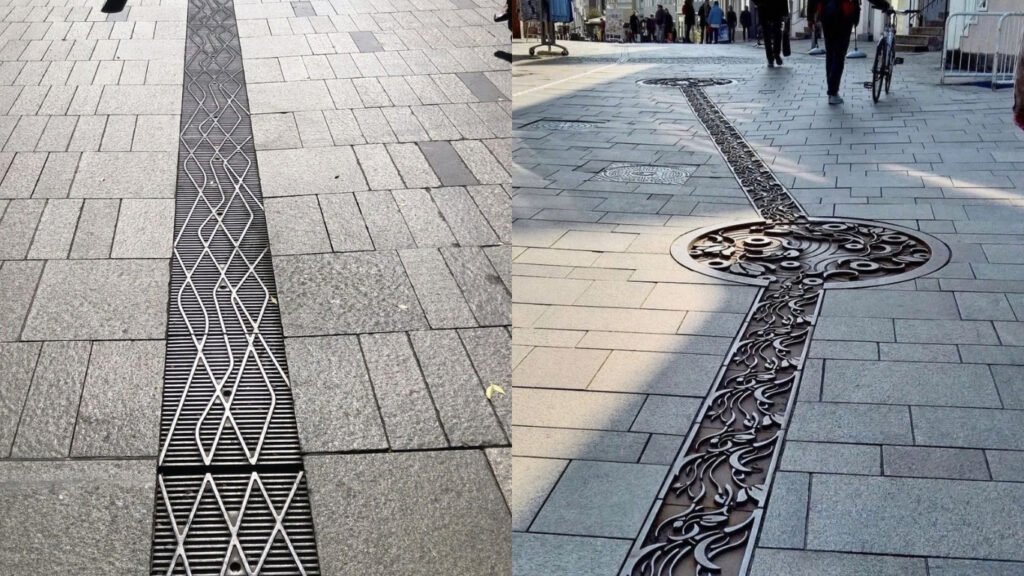
Beyond manhole covers, cast iron plays a significant role in the drainage systems themselves pipes, gullies, channels, and grating systems that manage surface water and wastewater across urban and industrial environments.
Durability in Aggressive Environments
Drainage systems are exposed to some of the most chemically aggressive environments in civil infrastructure sewage gases, acidic groundwater, industrial runoff, and biological growth. Cast iron’s dense molecular structure provides resistance to many of these agents, particularly in abrasive flow conditions where softer materials erode more rapidly.
Acoustic Properties
One often overlooked advantage of cast iron drainage is its acoustic performance. Cast iron pipes and channels dampen the sound of flowing water significantly better than PVC or HDPE alternatives an important consideration in buildings, underground car parks, and urban environments where noise transmission is a concern.
Lifespan
Cast iron drainage systems have a documented service life of 50 to 100 years under normal conditions. Infrastructure installed in European cities during the mid-20th century is still in active service, and many older Victorian era systems remain partially functional. This lifespan compares favorably with PVC (50 to 80 years) and HDPE (50 to 70 years) under comparable conditions.
| Material | Typical Lifespan | Acoustic Performance | Load Resistance | Theft Risk |
|---|---|---|---|---|
| Cast Iron | 75–100+ years | Excellent | Excellent | Low (heavy) |
| Ductile Iron | 75–100+ years | Good | Superior | Low (heavy) |
| Composite/FRP | 30–50 years | Poor | Good | Higher (light) |
| Concrete | 40–60 years | Fair | Good | Very Low |
| PVC/HDPE | 50–80 years | Poor | Limited | Moderate |
4. The EN 124 Standard: What It Requires and Why It Matters
In Europe, manhole covers and gully tops for vehicular and pedestrian areas are governed by BS EN 124:2015 the European standard that replaced earlier national standards and unified specifications across EU member states.
EN 124 is divided into material specific parts. EN 124-2 covers gully tops and manhole tops made of cast iron specifically, defining the material properties, manufacturing tolerances, load testing requirements, and marking specifications that compliant products must meet.
Why EN 124 Compliance Matters for Procurement
For procurement managers and engineers specifying infrastructure products in Europe, EN 124 compliance is not optional it is a legal and contractual requirement for most public infrastructure projects. Covers installed in public roads, footpaths, and utility infrastructure must be certified to the appropriate EN 124 load class.
Specifying EN 124-compliant cast iron products from certified manufacturers provides clear liability protection the product has been independently tested and certified to perform as specified. Non-compliant alternatives regardless of their marketing claims do not offer this assurance.
EN 124 Key Facts for Procurement
Standard: BS EN 124:2015 (Gully tops and manhole tops for vehicular and pedestrian areas) Cast iron specific: EN 124-2:2015 Load classes: A15 to F900 (six classes) Testing: Static load test to verify class compliance Marking: All compliant products must be permanently marked with EN 124, load class, material, and manufacturer identification Applicability: Required for all public road and pedestrian infrastructure in EU member states
5. Cast Iron vs Alternatives: An Honest Comparison
The main alternatives to cast iron for manhole covers and drainage infrastructure are ductile iron, composite (FRP/GRP), concrete, and steel. Each has legitimate applications the question is which material best matches the requirements of a given project.
Cast Iron vs Ductile Iron
Ductile iron is a modified form of cast iron with a different graphite microstructure that gives it greater tensile strength and impact resistance. For very high load applications (D400 and above), ductile iron is often preferred over grey cast iron. For standard urban applications (A15 to C250), grey cast iron remains widely specified and cost effective.
Cast Iron vs Composite (FRP/GRP)
Composite covers are lighter, easier to handle, and non-conductive which makes them preferable in electrical infrastructure environments. However, they have a shorter service life, lower load-bearing capacity at equivalent cost, and are more susceptible to surface degradation under UV and traffic. They are also more vulnerable to theft due to their lower weight and scrap value.
Cast Iron vs Concrete
Concrete covers are heavy, low cost, and effective in non-traffic areas. They are not suitable for vehicle traffic without significant reinforcement, and they are brittle subject to cracking under impact. They lack the precision fit of cast iron and typically cannot meet higher EN 124 load classes without composite reinforcement.
| Criterion | Cast Iron | Ductile Iron | Composite | Concrete |
|---|---|---|---|---|
| EN 124 compliance | Full range | Full range | Selected classes | Limited |
| Load capacity | A15 to D400 | A15 to F900 | A15 to C250 | A15 to B125 |
| Service life | 75–100+ years | 75–100+ years | 30–50 years | 30–50 years |
| Theft resistance | High | High | Low–Medium | Very High |
| Installation complexity | Standard | Standard | Easy (light) | Heavy |
| Acoustic performance | Excellent | Good | Poor | Fair |
| Initial cost | Medium | Medium–High | Medium | Low |
| Lifecycle cost | Low | Low | Medium–High | Medium |
6. Load Classes Explained: Choosing the Right Specification
Selecting the correct EN 124 load class is one of the most important decisions in specifying cast iron infrastructure products. Under specification risks cover failure and safety incidents; over specification increases cost unnecessarily.
| Class | Test Load | Typical Application |
|---|---|---|
| A15 | 15 kN | Pedestrian areas, parks, cycle paths; no vehicle access |
| B125 | 125 kN | Footways, pedestrian precincts, car parks for light vehicles |
| C250 | 250 kN | Kerbside channels, road edge; occasional vehicle overhang |
| D400 | 400 kN | Carriageways, public roads, hard shoulders, standard highway specification |
| E600 | 600 kN | Areas subject to high wheel loads, docklands, industrial zones |
| F900 | 900 kN | Aircraft pavements, airports, extreme load applications |
For most urban road applications across Europe, D400 is the standard specification. B125 covers car parks and pedestrian areas. Any project on a public carriageway should default to D400 unless a structural engineer has specifically assessed a lower class as appropriate.
7. Limitations of Cast Iron and How They Are Managed
An honest evaluation of cast iron for infrastructure must acknowledge its limitations alongside its strengths.
Weight
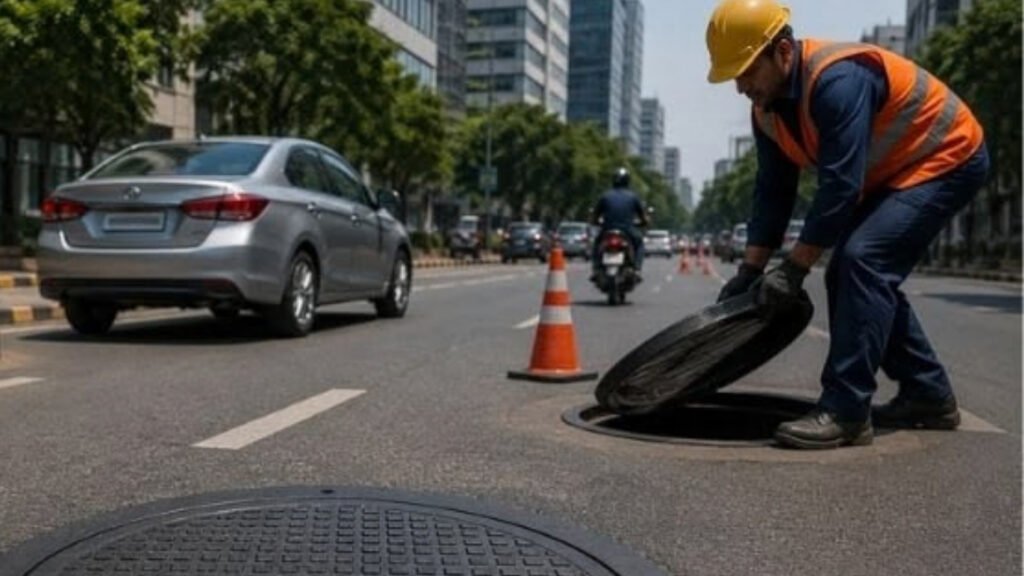
Cast iron covers are heavy typically 40 to 80 kg for a standard D400 road cover. This makes handling and installation more labour-intensive than composite alternatives. In most infrastructure projects, this is managed through standard installation equipment and procedures. It becomes more significant for maintenance access in confined spaces.
Corrosion Risk
Cast iron is susceptible to corrosion, particularly internal corrosion in drainage pipes exposed to moisture and sewage gases over long periods. This is managed through protective coatings applied during manufacture and, where necessary, through epoxy lining of drainage pipes. Properly coated and maintained cast iron infrastructure performs reliably for its full design life.
Brittleness Under Impact
Grey cast iron is brittle under sudden impact loads a sharp blow can crack it where ductile iron would deform. For very high impact applications, ductile iron is specified instead. For standard urban road applications, the thickness and weight of cast iron covers provide adequate protection against normal impact events.
Managing Cast Iron Limitations
The limitations of cast iron; weight, corrosion risk, and brittleness are well understood by infrastructure engineers and are managed through established specification, installation, and maintenance practices. They do not represent barriers to cast iron use in appropriate applications; they are design parameters that experienced engineers account for as a matter of course.
8. Procurement Considerations for B2B Buyers
For procurement managers sourcing cast iron infrastructure products whether for construction projects, municipal supply contracts, or distribution several factors beyond the product specification itself deserve attention.
Manufacturer Certification
All cast iron manhole covers and gully tops supplied for European infrastructure projects must carry EN 124 certification. Buyers should request test certificates and verify that the load class markings on the products match the certified specification. Third party certification from an accredited test laboratory provides the strongest assurance.
Supply Chain Reliability
Infrastructure projects typically require consistent supply of specific products over extended periods. A supplier with established manufacturing partnerships, documented quality control processes, and a track record of on time delivery reduces project risk significantly particularly for large scale or time critical installations.
Total Cost of Ownership
Initial product cost is only one element of the total cost of ownership for infrastructure drainage products. A cast iron cover that lasts 75 years without replacement represents a very different lifecycle cost than a composite alternative requiring replacement at 30 to 40 years even if the composite product is cheaper to purchase initially.
European vs Non-European Supply
The source of cast iron products matters for quality assurance in European infrastructure applications. European manufacturers operate under CE marking requirements and must demonstrate EN 124 compliance through accredited testing. Products sourced from outside the EU may not meet these requirements, creating compliance risk for contractors and specifiers.
Castinex and Infrastructure Cast Iron
Castinex coordinates cast iron supply for European B2B clients through structured manufacturing partnerships with certified European producers. Our infrastructure product range covers manhole covers, drainage systems, and related cast iron components all sourced from partners whose processes are validated to European quality and compliance standards. Contact us to discuss project requirements: info@castinex.eu
9. Frequently Asked Questions
How long do cast iron manhole covers last?
With correct specification, installation, and maintenance, cast iron manhole covers typically last 50 to 100 years or more. Many covers installed in European cities in the mid-20th century remain in service today. The limiting factor is usually physical damage from abnormal loads or accidents rather than material degradation.
What is the difference between cast iron and ductile iron manhole covers?
Grey cast iron and ductile iron are both iron carbon alloys but with different microstructures. Ductile iron has a spheroidal graphite structure that gives it higher tensile strength and impact resistance. It is preferred for the highest load classes (E600, F900) and applications with high impact risk. For standard urban road applications (B125 to D400), grey cast iron is widely specified and cost effective.
What EN 124 load class do I need for a public road?
For standard public carriageways and hard shoulders, D400 is the required load class. This covers the 400 kN static test load that represents normal heavy goods vehicle axle loads. Lower classes may be appropriate for pedestrian areas (A15 or B125) or car parks (B125 or C250) consult a structural engineer for project specific advice.
Are cast iron manhole covers a theft risk?
Cast iron covers are significantly more theft resistant than composite alternatives due to their weight (40 to 80 kg for a standard road cover). Locking mechanisms and anti-theft designs are available for applications in high-risk locations. Ductile iron and cast iron covers also have scrap metal value, which has historically made them targets in some regions lockable covers address this risk directly.
Can cast iron drainage systems be repaired rather than replaced?
Yes. Cast iron drainage pipes can be relined with epoxy or CIPP (cured in place pipe) lining systems, restoring structural integrity and flow capacity without excavation. This is a cost effective option for aging cast iron systems showing corrosion but not structural failure. Full replacement is typically considered when pipes show significant structural cracking or collapse.
Final Thoughts
Cast iron has been specifying itself for over 150 years not through marketing, but through performance. Every manhole cover still in service from the Victorian era is a demonstration that the material works, that it lasts, and that its characteristics align closely with what urban infrastructure demands.
Modern alternatives have their place. Composite covers suit electrical environments and locations where weight is genuinely prohibitive. Ductile iron handles the most extreme load applications. But for the vast majority of urban and industrial drainage applications across Europe, cast iron remains the material that engineers specify, municipalities maintain, and contractors install because it continues to be the most reliable long term solution available.
Looking for cast iron infrastructure products?
Castinex supplies cast iron products for infrastructure, drainage, and industrial applications to B2B clients across Europe sourced from certified European manufacturing partners with validated quality processes. Contact us: info@castinex.eu | castinex.eu | +36 70 638 0578
About Castinex
Castinex is a European managed cast iron specialist, coordinating production for B2B clients across Europe through structured manufacturing partnerships and engineering based planning. We support OEM and private label projects with technical validation, controlled processes, and reliable supply execution all aligned with European market expectations. Our product range spans cast iron cookware, infrastructure castings, drainage systems, and industrial components.