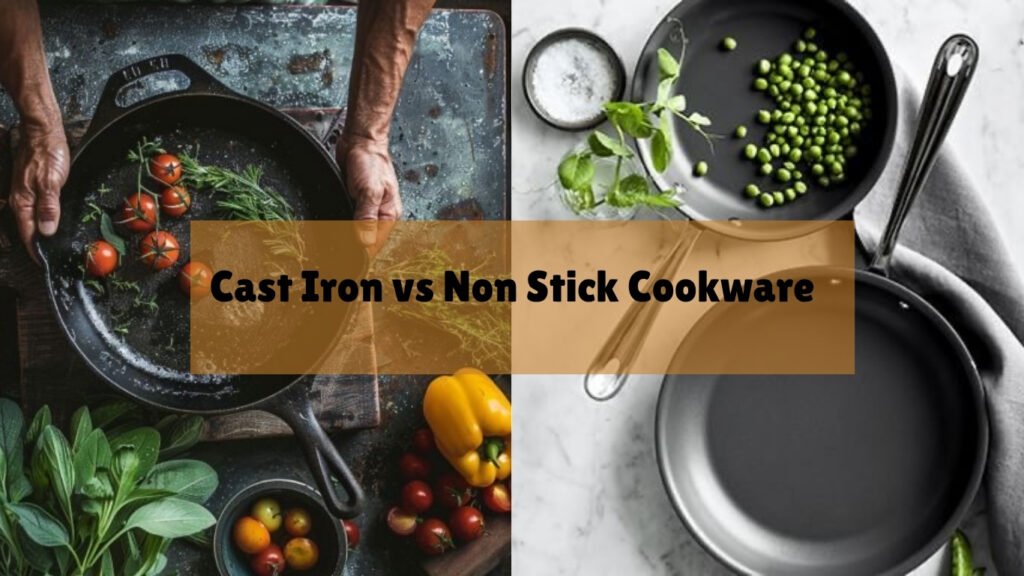
Cast Iron vs Non Stick Cookware: Which Is Better for Your Kitchen?
If you have ever stood in a kitchen store wondering whether to pick up a cast iron skillet or a non stick pan, you are not alone. It is one of the most common questions in the cookware world and one where the answer genuinely matters for how you cook, how long your pan lasts, and even how healthy your meals are.
In this guide, we break down the real differences between cast iron and non stick cookware across seven key categories: durability, health and safety, heat performance, maintenance, versatility, price, and environmental impact. By the end, you will know exactly which one fits your cooking style.
Quick Answer
Cast iron wins on durability, health, heat retention, versatility, and long term value. Non stick wins on convenience and ease of use for delicate foods. For most serious cooks and BBQ enthusiasts, cast iron is the better long-term investment.
What We Cover in This Guide
- What is the difference between cast iron and non stick?
- Durability: which pan lasts longer?
- Health and safety: which is safer to cook with?
- Heat performance: which cooks better
- Maintenance: which is easier to care for
- Versatility: which does more?
- Price and value: which is worth the money?
- The verdict: which should you choose?
1. What Is the Difference Between Cast Iron and Non Stick?
Before comparing performance, it helps to understand what each type of cookware actually is.
Cast Iron Cookware
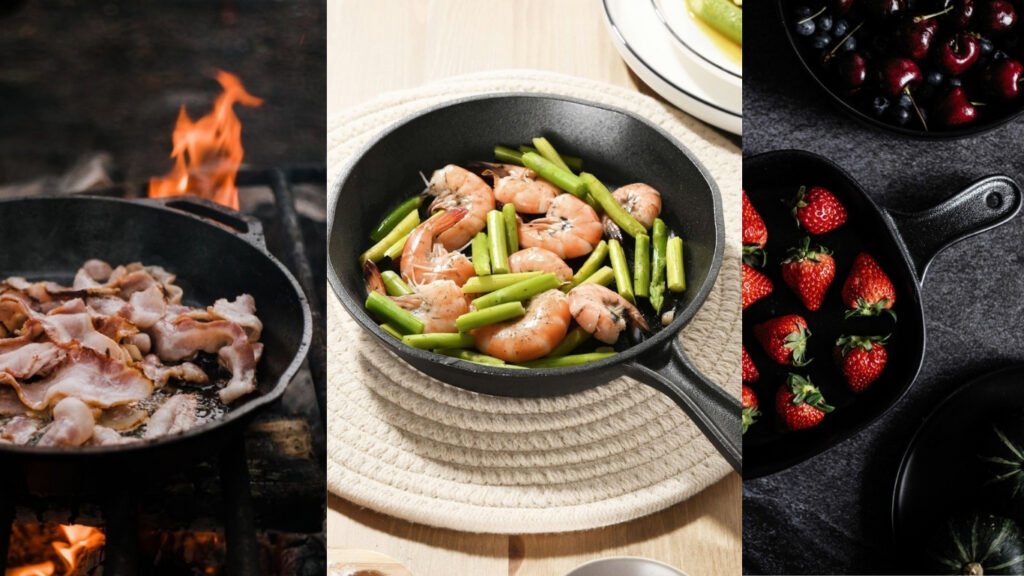
Cast iron is a cooking vessel made from molten iron poured into a mold and cooled. It has been used for centuries and is valued for its exceptional heat retention, durability, and natural non stick surface that develops over time through a process called seasoning.
Cast iron cookware includes skillets, grill plates, Dutch ovens, and griddles. It works on all heat sources; gas, electric, induction, and open fire and can go directly into the oven.
Non Stick Cookware
Non stick cookware is typically made from aluminum or stainless steel with a chemical coating most commonly PTFE (known commercially as Teflon) or newer ceramic based alternatives. The coating prevents food from sticking to the surface, which makes cooking and cleaning easier, especially for eggs and fish.
The key limitation: the coating degrades over time and can become damaged at high temperatures or with metal utensils.
| Feature | Cast Iron | Non-Stick |
|---|---|---|
| Material | Soid Iron | Aluminum or steel with coating |
| Surface | Seasoned iron (natural) | PTFE or ceramic coating (artificial) |
| Weight | Heavy (1–3 kg) | Light (0.5–1.5 kg) |
| Price range | €20 – €150+ | €10 – €100+ |
| Lifespan | Decades to lifetime | 3–5 years average |
| Best for | Searing, grilling, baking, BBQ | Eggs, fish, pancakes |
2. Durability: Which Pan Lasts Longer?
This is where cast iron has a decisive advantage.
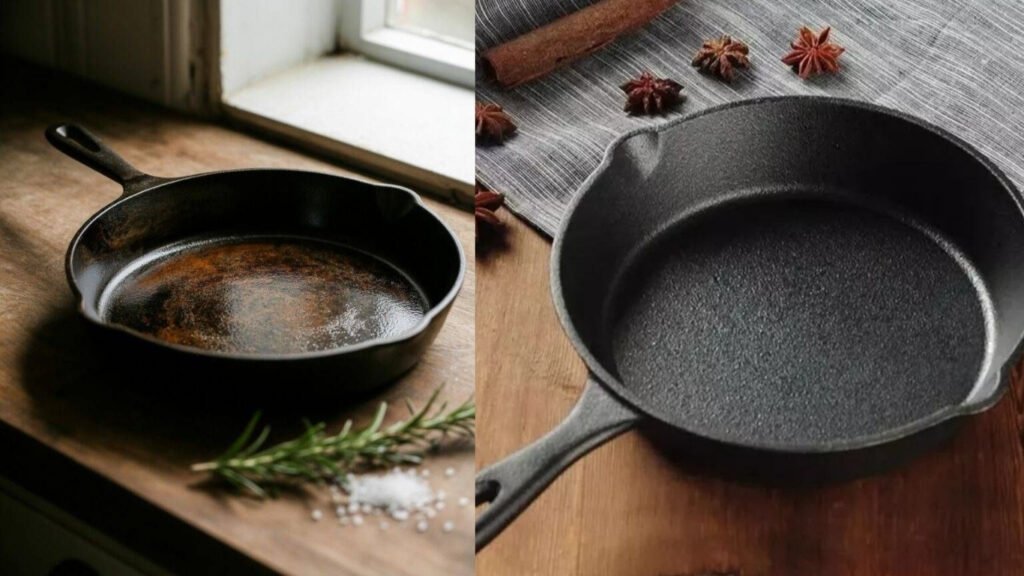
A well maintained cast iron pan can last generations. It is not unusual for cast iron skillets to be passed down from grandparents to grandchildren still in perfect working condition. The material does not scratch, chip from use, or degrade with heat. Rust is the only real threat and it is easily treated with oil and a little heat.
Non stick cookware, by contrast, has a built in expiry. The coating; whether PTFE or ceramic begins to wear down after 2 to 5 years of regular use, especially if exposed to high heat, metal utensils, or abrasive cleaning. Once the coating is damaged, the pan should be replaced.
Durability Verdict
Cast iron wins; by a large margin. A cast iron skillet purchased today could still be in use in 2075. Non stick cookware will likely need replacing within 3 to 5 years.
3. Health and Safety: Which Is Safer to Cook With?
This is one of the most important questions for health conscious cooks and the answer has shifted significantly in recent years.
Traditional non stick coatings based on PTFE (Teflon) are generally considered safe at normal cooking temperatures. However, when overheated above 260°C, they can release fumes that are harmful to humans and toxic to pet birds. Older pans may also contain PFOA, a chemical now banned in the EU due to health and environmental concerns.
Cast iron has no chemical coating. When seasoned properly, it is completely non toxic. There is also evidence that cooking in cast iron adds small amounts of dietary iron to food a meaningful benefit for people with iron deficiency. It contains no synthetic materials, no coatings to chip into your food, and no temperature limits.
Health Verdict
Cast iron wins. No coatings, no chemicals, no temperature concerns. Newer ceramic non stick options are safer than old Teflon, but cast iron remains the gold standard for health conscious cooking.
4. Heat Performance: Which Cooks Better?
Cast iron and non stick behave very differently when it comes to heat and understanding this helps you choose the right pan for each task.
Heat Retention
Cast iron excels at retaining heat. Once hot, it stays hot which is exactly what you need for searing meat, grilling on a BBQ plate, or keeping food warm after cooking. This even heat distribution also means fewer hot spots and more consistent cooking results.
Non stick pans heat up faster but lose heat more quickly. They are better suited for low to medium heat cooking tasks.
High Heat Cooking
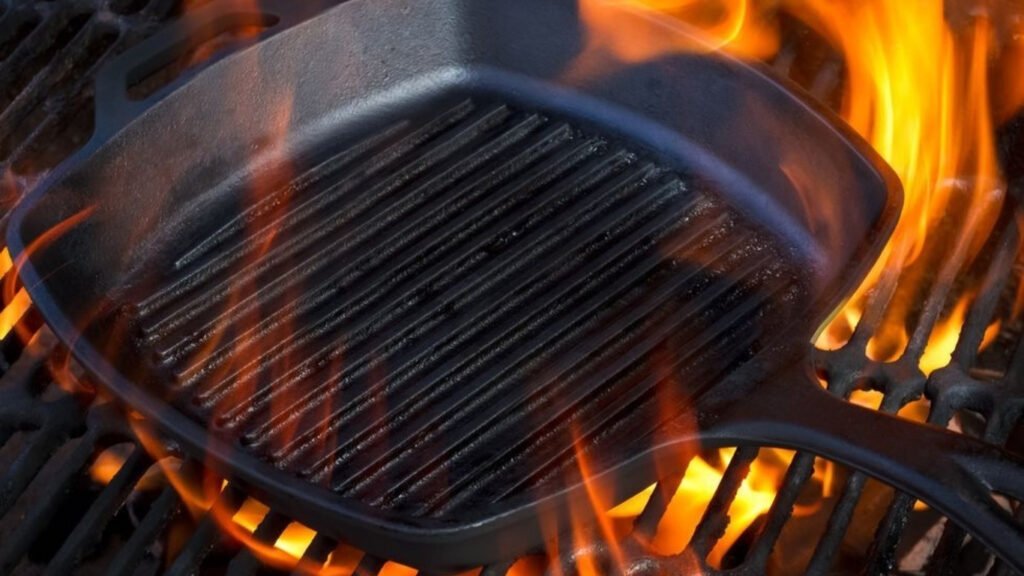
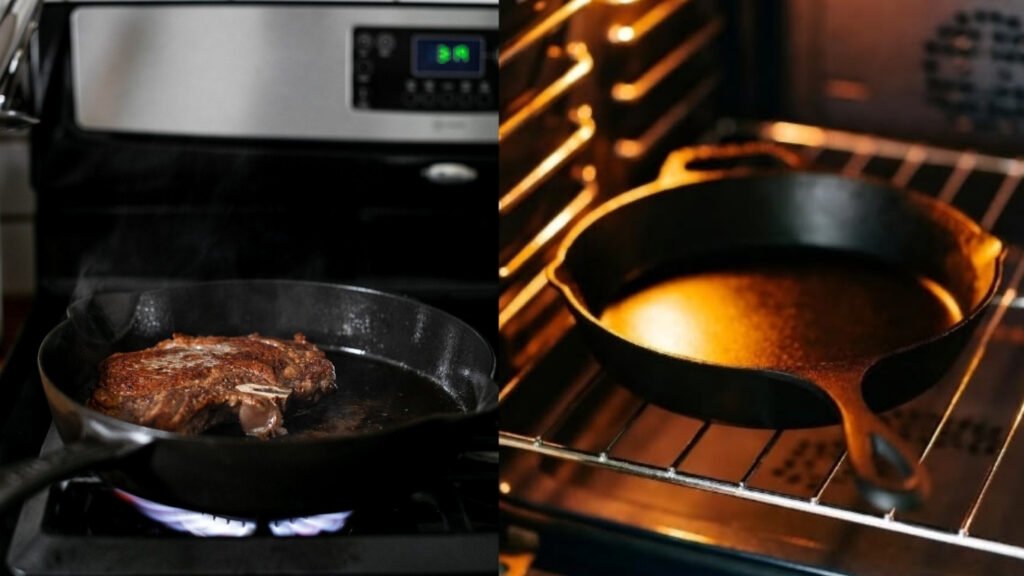
Cast iron can handle extreme heat on a gas hob, in an oven at 250°C, or directly on a fire or grill. This makes it the preferred choice for steakhouses, BBQ cooking, and any recipe requiring a hard sear.
Non stick pans should not be used above 200–220°C. Exceeding this risks damaging the coating and releasing fumes.
Heat Performance Verdict
Cast iron wins for high-heat cooking, searing, grilling, and BBQ. Non stick wins for low heat tasks like scrambled eggs or crepes where delicate handling matters.
5. Maintenance: Which Is Easier to Care For?
This is the one area where non stick has a genuine advantage at least in the short term.
Non stick pans are easy to clean: a soft cloth and warm soapy water is usually enough. There is no seasoning required and no rust risk if stored properly.
Cast iron requires more attention. After each use, it should be cleaned without harsh soap (which strips the seasoning), dried immediately to prevent rust, and given a light coating of oil. Seasoning the pan periodically applying oil and heating it; builds up the natural non stick surface over time.
The good news: once you develop a routine, cast iron maintenance takes only a few minutes per use. And a well seasoned cast iron pan actually becomes easier to cook on over time, not harder.
Quick Reference for Cast Iron Maintenance
Avoid soaking in water
Clean with a brush or cloth while still warm
For 1-2 minutes
Dry thoroughly on the hob over low heat
Cooking oil
Apply a thin layer of cooking oil with a cloth
Season in the oven (200°C for 1 hour)
every few months or when needed
Store in a dry place
Prevent moisture buildup
Maintenance Verdict
Non stick wins on convenience. Cast iron requires more care but the reward is a pan that improves with age and lasts a lifetime.
6. Versatility: Which Does More?
Cast iron is one of the most versatile cooking tools in any kitchen. The same skillet can go from the hob to the oven to the grill to the campfire without any limitations. It works on every heat source including induction.
Non stick pans are more limited. Most are not suitable for oven use above 180°C. Very few are designed for grill or open fire cooking. They also cannot be used with metal utensils without risking damage to the coating.
| Cooking Use | Cast Iron | Non-Stick |
|---|---|---|
| Gas hob | ✓ Excellent | ✓ Good |
| Electric hob | ✓ Excellent | ✓ Good |
| Induction | ✓ Excellent | Varies by model |
| Oven (all temps) | ✓ Excellent | Limited (max ~180°C) |
| BBQ / Grill | ✓ Excellent | ✗ Not suitable |
| Open fire/ Campfire | ✓ Excellent | ✗ Not suitable |
| Metal utensils | ✓ Safe | ✗ Damages coating |
| High-heat searing | ✓ Ideal | ✗ Not recommended |
Versatility Verdict
Cast iron wins — especially for BBQ, grilling, and oven cooking. For dedicated egg or fish pans at low heat, non-stick is the better tool.
7. Price and Value: Which Is Worth the Money?
The initial purchase price tells only part of the story.
Non stick pans are often cheaper to buy a decent pan can be found for €15 to €40. But because they need replacing every 3 to 5 years, the lifetime cost is higher than it appears.
A quality cast iron skillet costs between €30 and €100 for a European made product. But it will likely last 20, 30, or even 50+ years with proper care. This makes cast iron significantly better value over a lifetime of cooking.
| Cast Factor | Cast Iron | Non-Stick |
|---|---|---|
| Average purchase price | €35 – €100 | €15 – €60 |
| Replacement frequency | Once in a lifetime | Every 3–5 years |
| 10-year total cost (est.) | €50 – €100 | €60 – €150+ |
| Value over time | Increases with use | Decreases with use |
Value Verdict
Cast iron wins on long-term value. The upfront cost is higher, but it is the last skillet you will ever need to buy.
8. The Verdict: Which Should You Choose?
The honest answer is: it depends on how you cook. But for most home cooks, BBQ enthusiasts, and anyone who values quality and longevity, cast iron is the better choice.
Choose Cast Iron If You:
- Cook steaks, chops, or anything that benefits from a hard sear
- Use a BBQ or outdoor grill regularly
- Want cookware that lasts decades, not years
- Cook on induction and need guaranteed compatibility
- Care about cooking without chemical coatings
- Want a pan that improves with use over time
Choose Non-Stick If You:
- Mainly cook eggs, fish, or pancakes at low heat
- Prefer lightweight cookware
- Want minimum cleaning effort and are happy to replace pans every few years
- Are a beginner cook and want maximum convenience
Our Recommendation
The ideal kitchen has both. Use a cast iron skillet or grill plate for searing, BBQ, and high heat cooking and keep one small non-stick pan for eggs and delicate tasks. If you can only choose one: cast iron will serve you better in the long run.
About Castinex
Castinex is a European managed cast iron manufacturing specialist, coordinating production for B2B clients across Europe through structured production partnerships and engineering based planning.
We support OEM and private label projects with technical validation, controlled processes, and reliable supply execution all aligned with European market expectations. Our cast iron cookware range, including skillets, grill plates, and kettles, is designed for retailers and kitchenware specialists who demand consistent quality without the premium price tag of luxury brands.
Whether you are a retailer looking to stock a reliable cast iron range, or a business exploring OEM and private label opportunities, we are here to support your project from planning to delivery.