
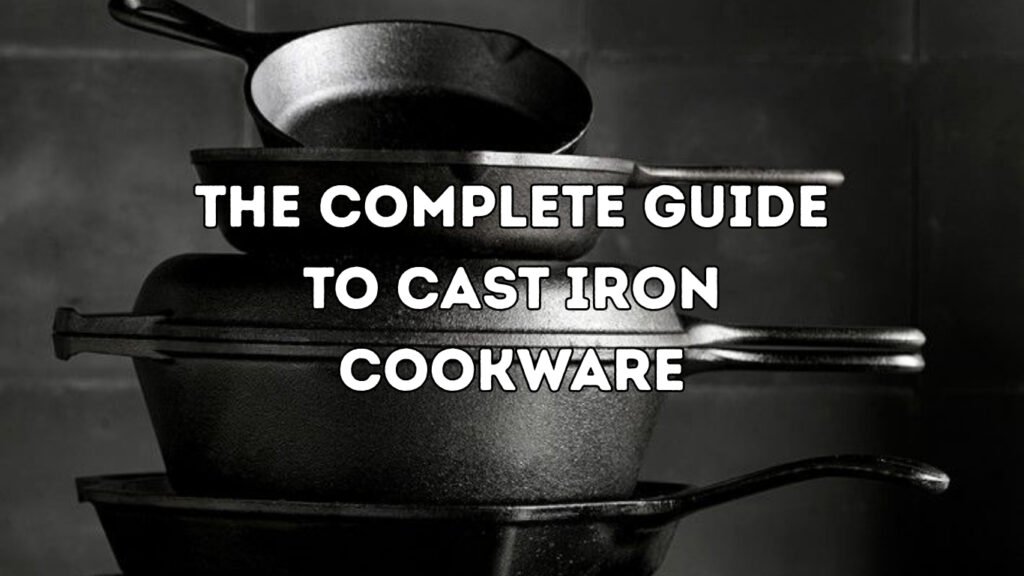
Cast Iron Cookware: The Complete Guide to Benefits, Care and Seasoning.
Cast iron cookware has been in use for over two thousand years. From ancient Chinese foundries to French country kitchens to modern professional restaurants, it has remained a fixture of serious cooking across every era and every culture, not out of tradition, but because it genuinely works better than the alternatives for many of the most important cooking tasks.
Yet despite its long history, cast iron is also one of the most misunderstood materials in the kitchen. Many people assume it is heavy, difficult to maintain, and only useful for specific dishes. The reality is quite different, this guide covers everything you need to know, what cast iron actually is, how it is made, why it performs the way it does, how to care for it, and why a well-chosen cast iron pan may be the last cookware purchase you ever need to make.
What You Will Learn
What cast iron cookware is and how it is made, Why cast iron retains heat better than other materials, How seasoning works and how to do it correctly, How long cast iron lasts and what affects its lifespan, Which cast iron products suit which cooking styles and How to choose cast iron cookware for your kitchen.
Contents
- What is cast iron cookware?
- How is cast iron made?
- Why does cast iron retain heat so well?
- What is seasoning and how does it work?
- How long does cast iron cookware last?
- What can you cook in cast iron?
- Cast iron cookware types: which is right for you?
- How to choose cast iron cookware?
- Frequently asked questions
1. What Is Cast Iron Cookware?
Cast iron cookware refers to a wide range of cooking vessels, including skillets, frying pans, Dutch ovens, grill plates, griddles, and woks, manufactured from cast iron, a high-carbon iron alloy. During production, molten iron is poured into precision molds, where it cools and solidifies into its final shape. This casting process gives each piece exceptional strength, durability, and consistent dimensions.
The term cast iron comes directly from this manufacturing method. Instead of being forged or hammered into shape like wrought iron, molten iron is poured into a mold and allowed to cool naturally. Once solidified, the cookware retains the exact geometry of the mold, enabling manufacturers to produce durable, dimensionally consistent products for both home and professional kitchens.
Cast iron typically contains between 2% and 4% carbon, a composition that gives the material its unique cooking characteristics. Its dense structure stores and distributes heat evenly, delivers outstanding heat retention, and develops a naturally seasoned cooking surface over time. With proper care, high-quality cast iron cookware can last for decades and is often passed down through generations.
Cast Iron in Numbers
- Carbon content: 2 – 4%
- Melting point: approximately 1,200°C
- Density: 7.2 g/cm³
- Thermal conductivity: lower than steel, but heat retention is significantly highe
- Lifespan: decades to over 100 years with proper care
2. How Is Cast Iron Made?
Understanding how cast iron is made helps explain why it performs the way it does, and why quality varies significantly between manufacturers.
The Traditional Casting Process
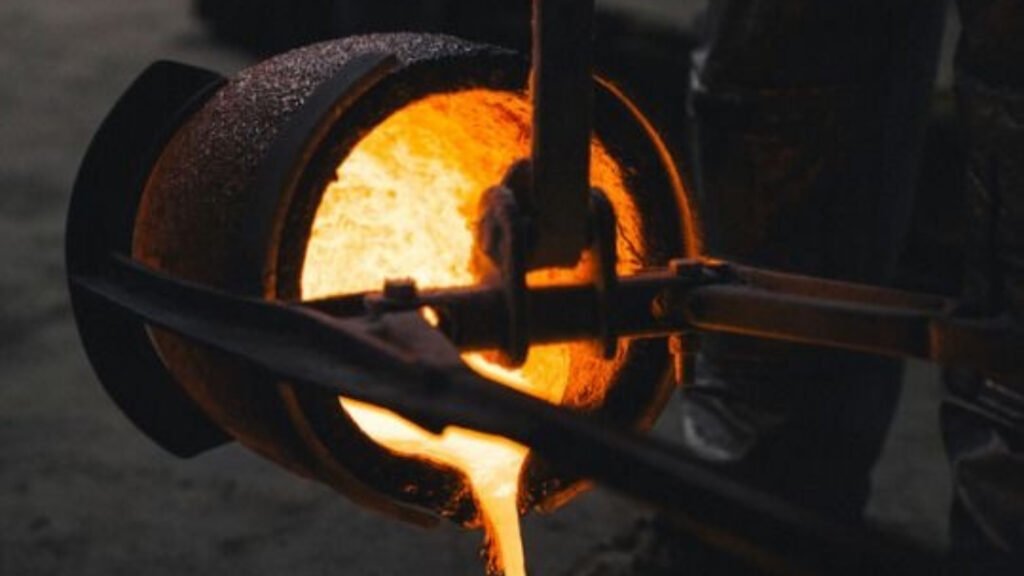
- Raw iron and carbon are melted together in a furnace at temperatures above 1,200°C
- The molten iron is poured into a sand mold shaped to the final product
- The iron cools slowly, taking the exact shape of the mold
- The mold is broken away, leaving the raw cast iron piece
- The piece is cleaned, ground, and inspected for defects
- It is then seasoned (coated with oil and heated) before packaging
Why Manufacturing Quality Matters
The quality of cast iron cookware is largely determined at the foundry. Key factors include the consistency of the iron alloy, the precision of the mold, the smoothness of the finished surface, and the quality of the initial seasoning.
European manufacturers — including those in Castinex’s certified partner network — apply strict engineering standards at every stage of this process, producing cookware that is consistent in thickness, smooth in texture, and free from the pitting and inconsistencies common in lower-quality production.
European Quality Standard
Castinex works exclusively with certified European manufacturing partners whose production processes are validated to meet European market quality expectations — from alloy composition to surface finishing and seasoning quality.
3. Why Does Cast Iron Retain Heat So Well?
This is one of the most important characteristics of cast iron — and the one that most affects how it cooks.
Cast iron is a poor conductor of heat compared to copper or aluminum. It heats up relatively slowly and unevenly. But once it reaches temperature, it stores an enormous amount of thermal energy and releases it slowly and consistently. This is called heat retention or thermal mass — and it is the property that makes cast iron so valuable for serious cooking.
What This Means in Practice
When you place a cold steak on a thin aluminum or non-stick pan, the pan loses heat rapidly. The surface temperature drops, the meat steams rather than sears, and you get a grey exterior instead of a proper crust.
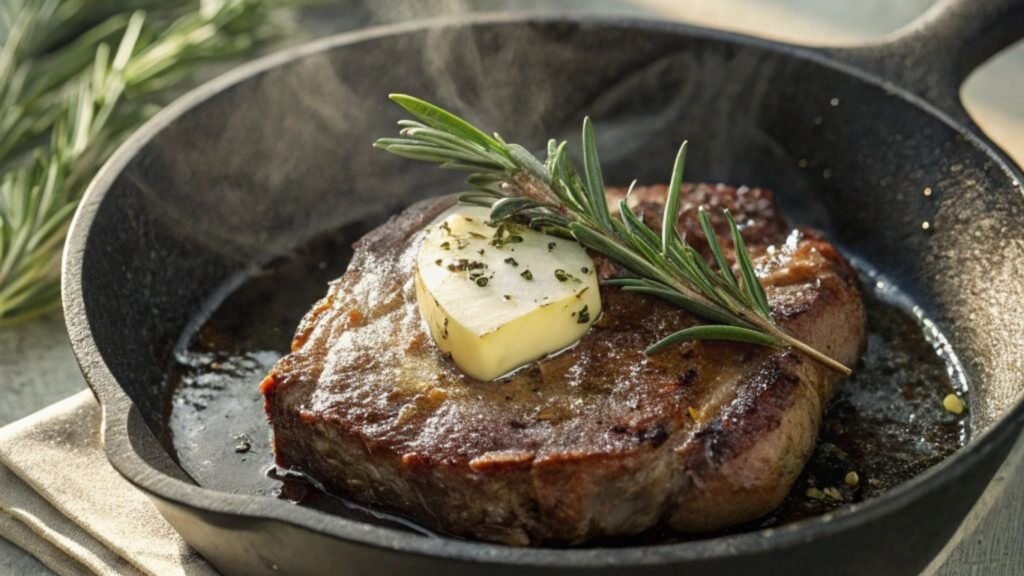
With cast iron, the pan has so much stored thermal energy that even a cold piece of meat placed on it barely affects the surface temperature. The heat stays consistent, the Maillard reaction happens properly, and you get the crust that defines a well-cooked steak.
| Property | Cast Iron | Aluminum | Stainless Steel | Copper |
|---|---|---|---|---|
| Heat-up speed | Slow | Fast | Medium | Very Fast |
| Heat retention | Excellent | Poor | Medium | Poor |
| Even distribution | Good | Excellent | Good | Excellent |
| High-heat performance | Excellent | Medium | Good | Medium |
| Oven safe (all temps) | Yes | Varies | Yes | Varies |
| BBQ / open flame | Excellent | No | Limited | No |
4. What Is Seasoning and How Does It Work?
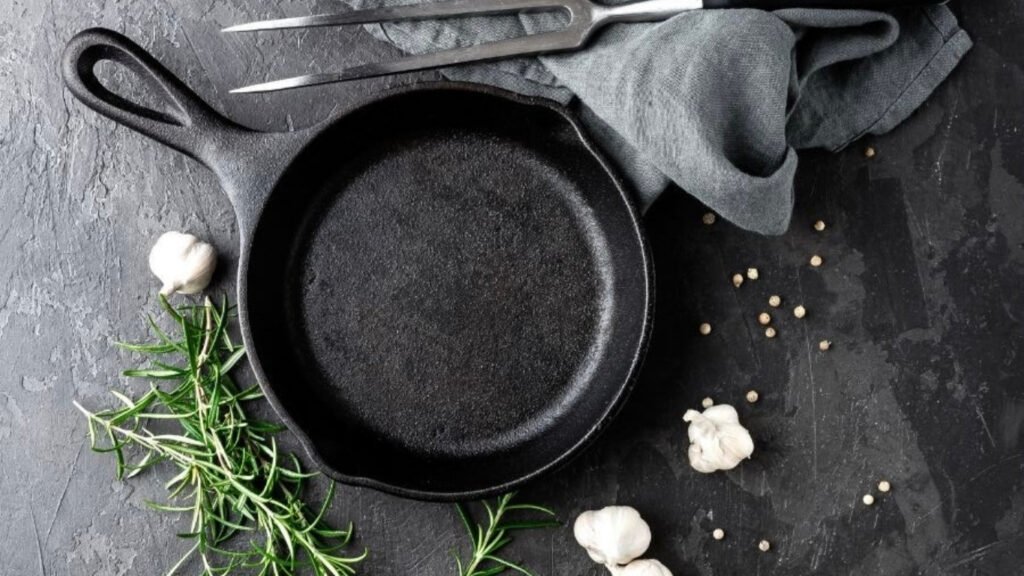
Seasoning is the process of baking oil into the surface of cast iron to create a natural, non-stick coating. It is the most misunderstood aspect of cast iron care — and the one that puts most people off.
Here is what is actually happening: when oil is applied to cast iron and heated above its smoke point, the fat molecules polymerize — they bond together and bond to the iron surface, creating a hard, smooth, protective layer. Over time and with repeated use, this layer builds up, and the cooking surface becomes progressively more non-stick.
Pre-Seasoned vs Unseasoned
Most quality cast iron cookware today — including all Castinex products — comes pre-seasoned. This means the manufacturer has already applied one or more layers of seasoning before the pan reaches you. A pre-seasoned pan is ready to use immediately, though the seasoning will improve significantly with the first few uses.
How to Re-Season Cast Iron (Step by Step)
- Wash the pan with warm water and a small amount of soap. Dry completely.
- Apply a very thin layer of oil with a cloth — flaxseed, vegetable, or grapeseed oil all work well.
- Wipe off almost all the oil — the layer should be barely visible.
- Place upside down in an oven preheated to 200–230°C.
- Bake for one hour. Turn off the oven and allow the pan to cool inside.
- Repeat 2 to 3 times for a strong base layer.
Seasoning Tip
The most common mistake is applying too much oil. A thick oil layer will become sticky and uneven when heated. Apply the thinnest possible coat — barely visible on the surface — and the result will be a hard, smooth, consistent layer after baking.
5. How Long Does Cast Iron Cookware Last?
The honest answer: indefinitely, with proper care.
Cast iron does not degrade the way coated cookware does. There is no surface that wears off, no chemical coating that chips, no material that breaks down at high temperatures. The iron itself is the cooking surface — and iron, once cast, is essentially permanent.
Cast iron skillets from the early 20th century are still in daily use in kitchens around the world. Antique cast iron pieces from the 1800s are collected, restored, and cooked with regularly. There is no other cookware material with a comparable lifespan.
The Only Real Threat: Rust
Cast iron will rust if left wet or stored without protection. However, rust does not destroy cast iron — it is a surface issue that can be completely reversed. A rusty cast iron pan can be restored to perfect condition by scrubbing off the rust and re-seasoning.
Lifespan Comparison
| Material | Lifespan |
|---|---|
| Cast iron | indefinite (50 – 100+ years with care) |
| Non-stick (PTFE) | 2 – 5 years |
| Ceramic coated | 3 – 7 years |
| Stainless steel | 10 – 20 years |
| Aluminum | 10 – 20 years |
6. What Can You Cook in Cast Iron?
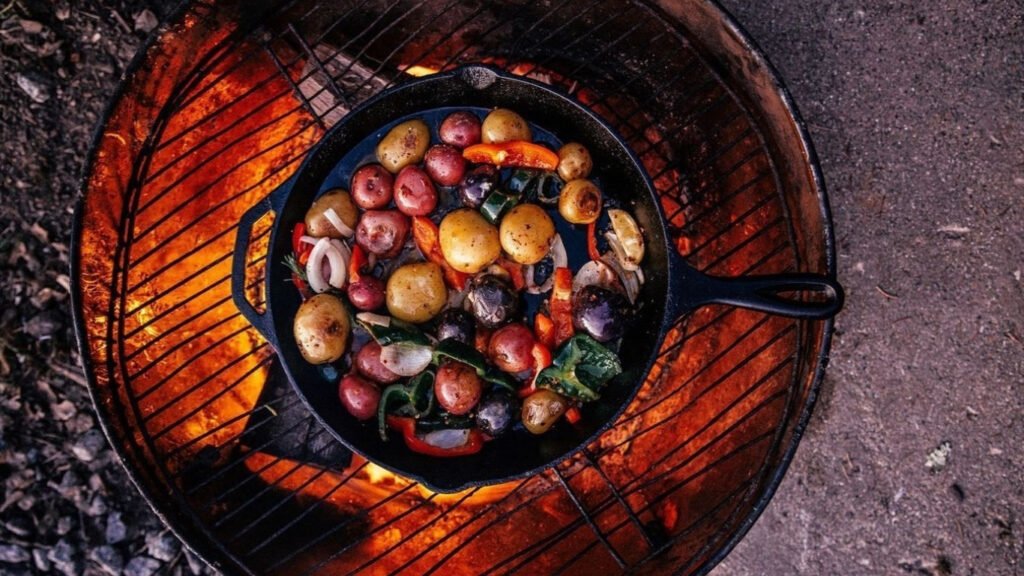
Cast iron is one of the most versatile cooking materials available. The same piece of cookware can move from a gas hob to an electric hob to an induction unit to an oven to a BBQ grill to an open campfire without any restrictions.
Cast Iron Excels At:
- Searing steaks, chops, and fish — the heat retention creates an unmatched crust
- BBQ and grilling — grill plates develop deep char marks and hold heat through the cook
- Baking — cornbread, frittatas, and skillet cookies benefit from cast iron’s even heat
- Braising and slow cooking — cast iron holds temperature beautifully for long cooks
- Stir-frying — cast iron woks reach and maintain the high heat needed for proper stir-fry
- Deep frying — the thermal mass keeps oil temperature stable when food is added
Where Cast Iron Is Less Ideal:
- Delicate fish at very low heat — a well-seasoned pan works, but non-stick is easier
- Highly acidic dishes cooked for long periods — tomato and wine sauces can strip seasoning
- Situations where weight is a concern — cast iron is heavier than other materials
7. Cast Iron Cookware Types: Which Is Right for You?
| Product | Best For | Key Feature | Castinex Range |
|---|---|---|---|
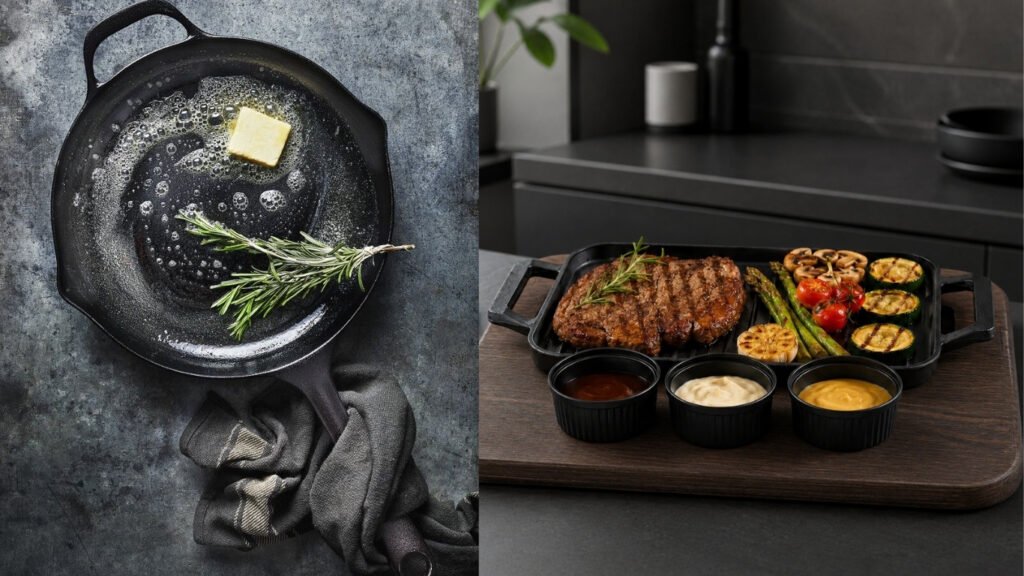
| Skillet / Frying Pan | Searing, frying, eggs, baking | Most versatile cast iron piece | 16 - 18 - 20 cm |
| Grill Plate | BBQ, grilling, char marks | Reversible: ridged + flat surface | Round and rectangular |
| Cast Iron Wok | Stir-frying, high-heat cooking | Deep curved surface, intense heat | 26 cm |
| Cast Iron Teapot | Tea, hot drinks | Enamel interior, stays warm longer | With cast iron warmer |
8. How to Choose Cast Iron Cookware?
Not all cast iron is equal. Here is what to look for when choosing a cast iron piece, whether for your own kitchen or for a retail range.
Surface Smoothness
A well-finished cast iron surface should be smooth to the touch after seasoning. Rough, pebbly surfaces — common in lower-quality products — make food stick and are harder to season properly. European-manufactured cast iron typically has a finer surface finish than budget Asian alternatives.
Wall and Base Thickness
Consistent thickness across the base and walls is essential for even heat distribution. Thin-walled cast iron heats unevenly and is more prone to cracking under thermal shock.
Pre-Seasoning Quality
Good pre-seasoning should be smooth, even, and slightly shiny — not patchy, sticky, or rough. A well pre-seasoned pan is ready to cook with immediately and will build a better seasoning layer over time.
Handle Design
Integrated cast iron handles — formed as a single piece with the pan — are the most durable option. They will never loosen, never break, and can go anywhere the pan goes. Some models also offer a wooden base or handle for easier handling at the table.
Castinex Quality Promise
Every Castinex product is sourced from certified European manufacturing partners whose processes are validated for consistency in alloy quality, surface finish, and seasoning. Our cookware range offers European quality at a price point competitive with imported alternatives — without compromising on the standards that make cast iron worth buying.
9. Frequently Asked Questions
Can I use soap to clean cast iron?
Yes, in moderation. A small amount of mild dish soap will not damage a well-seasoned pan. What damages cast iron is soaking it in water or scrubbing with abrasive materials that strip the seasoning. Wash quickly, rinse, and dry immediately.
Can cast iron go in the dishwasher?
No. The dishwasher strips seasoning and causes rapid rusting. Always wash cast iron by hand.
Is cast iron safe for health?
Yes. Cast iron contains no chemical coatings, no PTFE, and no PFOA. It is completely non-toxic. Cooking in cast iron can even add small amounts of dietary iron to food — a benefit for people with iron deficiency.
Does cast iron work on induction?
Yes. Cast iron is magnetic and works on all induction hobs. It is one of the few cookware materials that works on every heat source without exception.
How do I remove rust from cast iron?
Scrub the rust with steel wool or a stiff brush and warm water. Once the rust is removed, dry the pan completely, apply a thin layer of oil, and re-season in the oven. The pan will be fully restored.
Final Thoughts
Cast iron cookware is not the easiest material to cook with. It is heavy, it needs a little care, and it takes time to heat up properly. But for the cooks and kitchens that use it regularly, it becomes indispensable — not because of tradition or nostalgia, but because it genuinely performs better than the alternatives for the tasks that matter most.
A good cast iron skillet will outlast every other pan in your kitchen by decades. It will give you better sears, better BBQ results, better baking, and — over a lifetime of use — better value than any coated alternative.
That is why cast iron has been in kitchens for two thousand years. And why it will be in kitchens for the next two thousand as well.
Ready to explore cast iron cookware?
Browse the Castinex range of European cast iron skillets, grill plates, woks, and teapots at castinex.eu — or contact our team directly at info@castinex.eu for wholesale and retail inquiries.
About Castinex
Castinex is a European-managed cast iron specialist, coordinating production for B2B clients across Europe through structured manufacturing partnerships and engineering-based planning. We support OEM and private label projects with technical validation, controlled processes, and reliable supply execution — all aligned with European market expectations. Our cast iron cookware range is designed for retailers and kitchenware specialists who demand consistent quality without the premium price tag of luxury brands.