
What Is a Counterweight? How Cast Iron Counterweights Keep Machines Balanced and Safe
A counterweight is a mass positioned within a machine to balance a load, offset an opposing force or help control the machine’s centre of gravity. In heavy equipment, the right counterweight can be essential to stability, predictable handling and operation within the machine’s engineered limits. Cast iron is widely used for counterweight components because it provides substantial mass in a castable form and can be shaped to fit specific equipment layouts.
What We Cover in This Guide
Understanding how counterweights work is essential when evaluating the balance, stability and performance of industrial machinery. In this guide, we explore the role of cast iron counterweights, their applications and the key factors involved in selecting and sourcing the right components.
Here’s what you’ll learn:
What Is a Counterweight? Understand the basic purpose of counterweights and how they function in mechanical systems.
How Counterweights Work Learn about the principles of balance, moments and torque in machinery.
Why Cast Iron Is Used Discover the material properties and manufacturing advantages that make cast iron suitable for counterweight applications.
Industrial Applications Explore how counterweights are used in forklifts, excavators, cranes, agricultural machinery and other equipment.
Casting Quality and Design Understand the importance of weight accuracy, geometry, mounting features, material specifications and casting integrity.
Sourcing Cast Iron Counterweights Learn what OEMs, equipment manufacturers and procurement teams should consider when sourcing custom cast iron components.
Whether you are an equipment manufacturer, an OEM buyer or an industrial procurement professional, this guide will help you understand the technical considerations behind cast iron counterweights and their role in industrial machinery.
What Is a Counterweight?
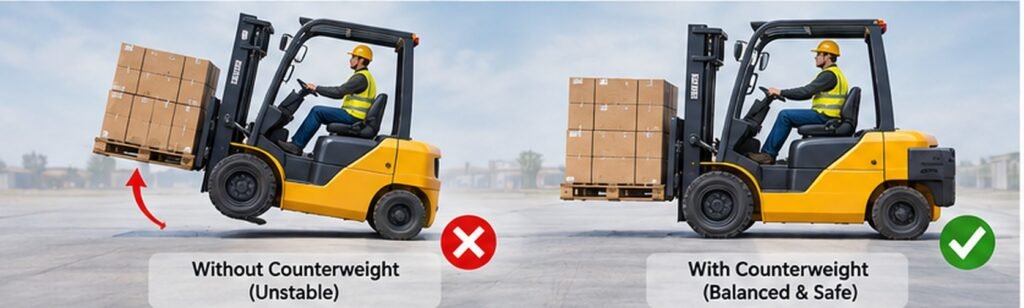
A counterweight is a deliberately positioned weight that counteracts another load or moment in a mechanical system. Rather than adding weight at random, engineers calculate the required mass and its location in relation to a pivot, axle, lifting point or machine structure. The goal is to achieve the intended balance while preserving the equipment’s design limits.
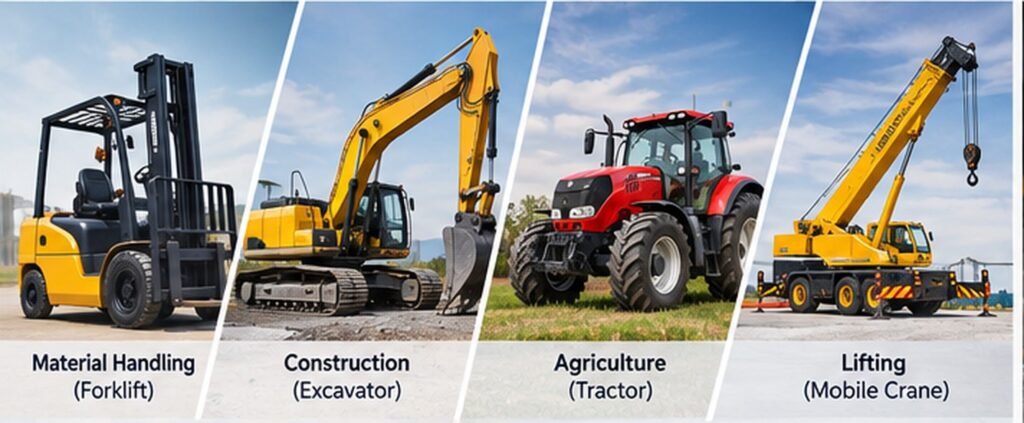
Counterweights are used in many types of equipment, including forklifts, excavators, wheel loaders, cranes, agricultural machinery, access platforms and selected industrial systems. The exact function varies by machine: a counterweight may help offset a load carried at the front, balance a boom, or contribute to the intended weight distribution of a moving assembly.
A counterweight is not a universal safety fix. Its mass, position, mounting method and geometry must match the machine’s approved engineering requirements. An incorrectly specified or installed counterweight can create additional hazards rather than improve stability.
How Does a Counterweight Work?
The basic principle is the turning effect of a force, often called a moment or torque. In a simplified static system, moment is calculated as force multiplied by the perpendicular distance from the pivot. A counterweight positioned on the opposite side of a pivot can create an opposing moment.
For a simple illustration, a load that acts farther from a pivot creates a larger moment than the same load acting closer to it. The counterweight’s required mass therefore depends not only on the load but also on the relevant distances and the machine’s geometry. Real machines may also involve dynamic forces, changing boom angles, acceleration, slopes, braking, wind and other factors, so the simplified principle is not a substitute for engineering calculations or manufacturer instructions.
The practical takeaway is straightforward: the correct counterweight is a designed component, not merely a heavy block of metal.
Why Are Cast Iron Counterweights Commonly Used?
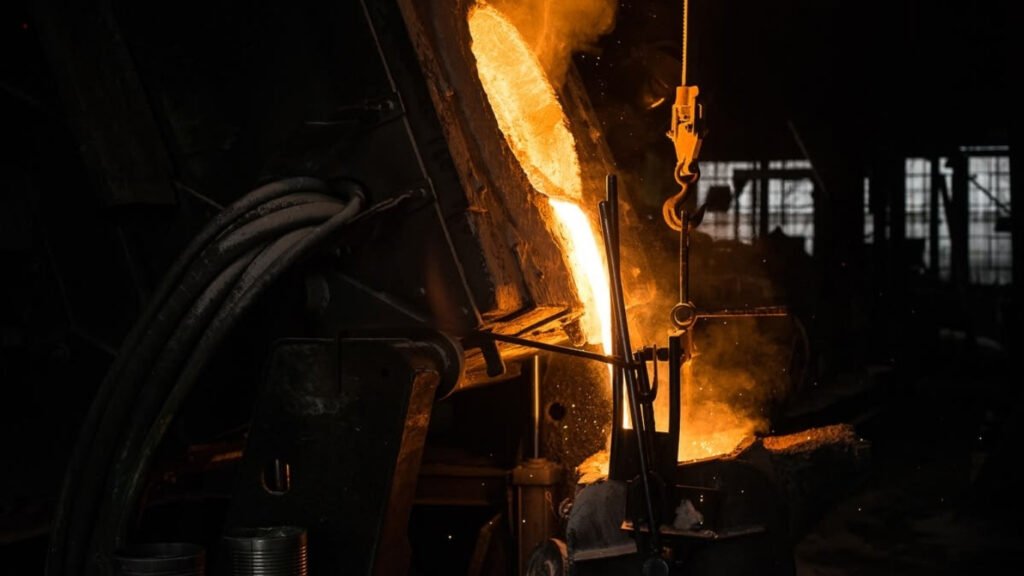
Cast iron is a practical material for many counterweight applications because it combines high density with good castability. A foundry can produce a substantial mass in a relatively compact shape and incorporate contours or mounting features that suit the equipment design. This can be useful when space is limited or when a component must fit around other machine structures.
Potential advantages of cast iron counterweight castings include:
- High mass in a compact component, helping engineers package the required weight within available space.
- Design flexibility, allowing cast shapes to follow the machine’s envelope and mounting arrangement.
- Repeatable production, when tooling, process controls and inspection requirements are appropriately managed.
- Potentially efficient material use, because the casting can be shaped close to the intended component geometry.
- Options for machining and surface finishing where specified by the customer’s drawing and application.
The best material and casting route depend on the application, required mechanical properties, operating environment, component geometry and customer specifications. Cast iron is common, but it is not automatically the right choice for every counterweight.
Where Are Cast Iron Counterweights Used?
1. Forklifts and Material-Handling Equipment
A forklift carries its load ahead of the front axle. A rear counterweight is part of the designed balance system that allows the truck to handle rated loads under specified conditions. Counterweight shape, mass, mounting interfaces and clearances are equipment-specific. The operator must always follow the forklift’s rated capacity plate and operating instructions.
2. Excavators and Wheel Loaders
Construction machines may use counterweights to help achieve the intended balance for lifting, digging and material handling. The required configuration depends on machine size, boom or arm geometry, attachment, operating conditions and manufacturer design. Counterweights for these applications often require robust castings and carefully controlled dimensions.
3. Cranes and Lifting Equipment
On cranes, counterweights help oppose the overturning moment generated by a suspended load and the crane’s boom configuration. Crane ballast arrangements are safety-critical and must be selected and installed only according to the crane manufacturer’s approved configuration and relevant procedures. Counterweight suppliers should manufacture to approved drawings and specifications rather than independently determine crane ballast requirements.
4. Agricultural Machinery
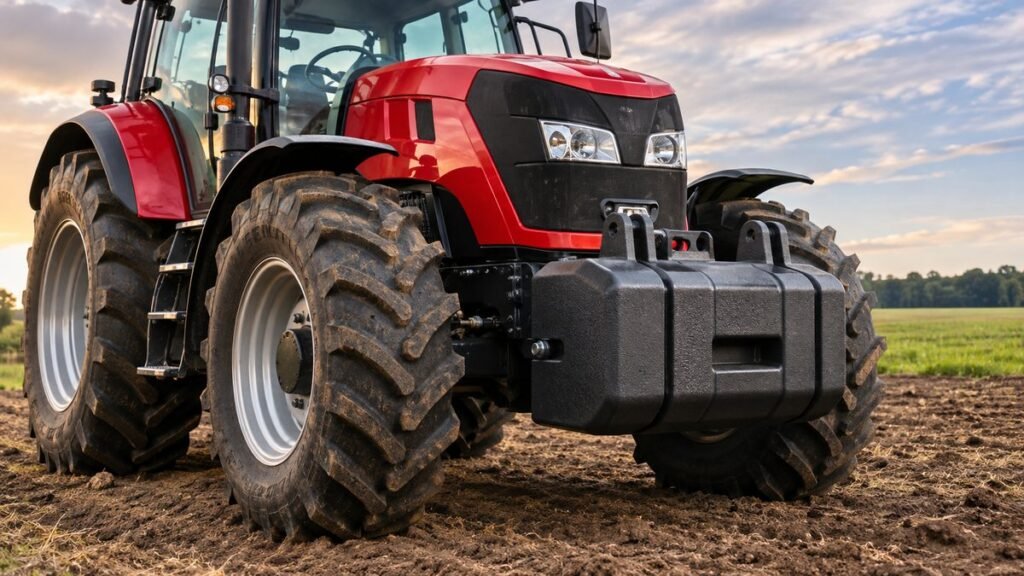
Tractors and some agricultural machines use ballast or counterweight components to achieve the intended weight distribution for a particular configuration. The correct amount and location depend on the tractor, implement, tyres, axle limits and manufacturer guidance. Too much or incorrectly positioned ballast can increase stress on components and affect soil compaction or handling.
5. Other Industrial and Mobile Equipment
Counterweights can also be found in access platforms, selected industrial mechanisms and other mobile equipment. Each use case has its own balance, mounting, durability and inspection requirements. The component must be designed for the machine it serves, not selected by weight alone.
What Makes a Good Counterweight Casting?
For OEMs and equipment manufacturers, the quality of a cast iron counterweight is determined by how consistently it meets the engineering specification and performs in its intended assembly. Key considerations include:
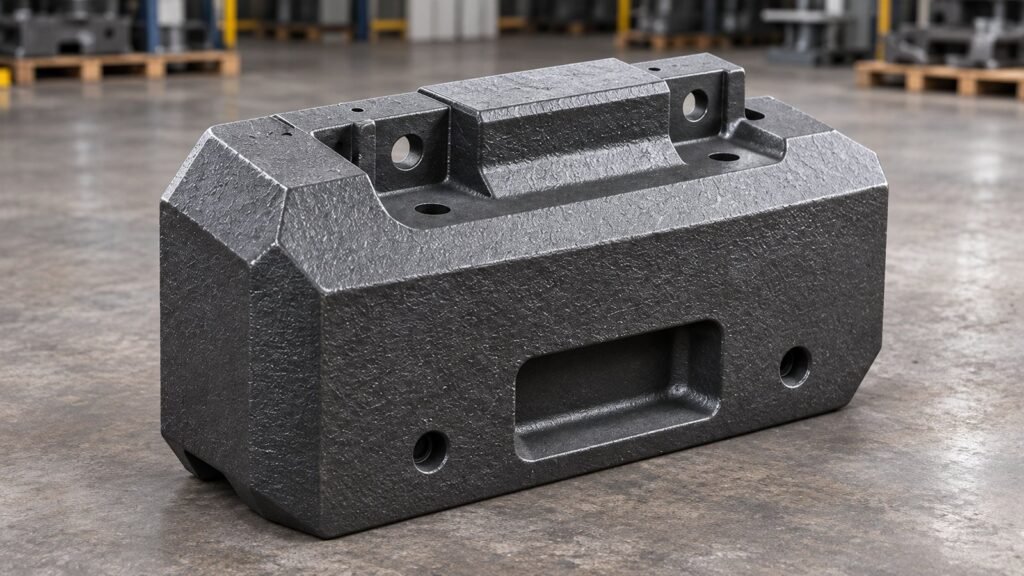
Specified mass and tolerances: The finished component must meet the target mass and any defined tolerance. Where mass distribution matters, total weight alone may not be sufficient.
Geometry and centre of gravity: The casting’s shape and internal or external features affect how the mass is distributed. Changes to geometry should be reviewed against the approved design.
Mounting interfaces: Bolt holes, bosses, slots, lifting points and mating surfaces need to match the drawing. Critical dimensions should be clearly identified for inspection.
Material and casting integrity: The grade and process should be appropriate to the application. Inspection criteria should be agreed in advance, including any requirements for defects, testing or documentation.
Machining and finishing: Some castings require machining of interfaces or specified surface treatments, coatings or paint. These requirements should be defined before production.
Repeatability and traceability: For ongoing OEM supply, consistent production, agreed inspection records and clear revision control help reduce fit-up issues and supply disruption.
How to Source Cast Iron Counterweights for OEM Production
A well-defined enquiry helps a supplier assess feasibility, costing and production requirements. When requesting a quotation, consider preparing the following information:
- 2D technical drawings and, where available, a 3D CAD model.
- Required material grade and applicable standards.
- Nominal weight, dimensional tolerances and critical-to-function features.
- Mounting details, machining requirements and surface finish or coating.
- Expected annual demand, batch size, forecast and target delivery schedule.
- Inspection, testing, documentation, packaging and traceability requirements.
- Delivery location and preferred commercial or logistics terms.
If a drawing is not yet available, share the application, approximate envelope, required mass and interface constraints as an initial discussion point. Final specifications for safety-critical equipment should be confirmed by the responsible design authority before production.
Why Work with a European-Based Sourcing Partner?
For buyers sourcing cast iron counterweights, coordination matters alongside the casting itself. A European-based sourcing partner can help align technical requirements, supplier communication, production follow-up, quality expectations and delivery planning. The scope of support should be agreed clearly for each project, including who approves drawings, who performs inspections and which documents accompany the shipment.
CASTINEX supports B2B enquiries for cast iron components and counterweight sourcing. For a project-specific assessment, share your drawing or component specification, target quantity, expected schedule and delivery destination. Availability, production route, inspection scope and lead time are confirmed against the individual requirement.
Frequently Asked Questions
What is the main purpose of a counterweight?
A counterweight is positioned to offset a load or turning moment and help a machine achieve its intended balance and stability. Its role depends on the machine’s design.
Why is cast iron used for counterweights?
Cast iron offers substantial mass and good castability, making it possible to produce compact components with application-specific shapes and mounting features. Suitability depends on the engineering requirements.
Are all counterweights interchangeable?
No. Counterweights are typically designed for a specific machine or configuration. Mass, geometry, centre of gravity and mounting interfaces must match the approved specification.
Can a counterweight be made to a customer drawing?
Custom castings can be considered from customer drawings and specifications. Feasibility depends on the component design, material, tooling, quantity, inspection and finishing requirements.
What information is needed for a counterweight quotation?
Useful inputs include drawings or CAD data, material grade, target mass, tolerances, machining and finishing requirements, quantity, inspection requirements, delivery schedule and destination.
Does adding more counterweight always make a machine safer?
No. Excess or incorrectly positioned weight can overload components or alter machine behaviour. Always follow the equipment manufacturer’s approved configuration and operating instructions.
Discuss Your Cast Iron Counterweight Requirements with CASTINEX
Looking for a sourcing partner for cast iron counterweights or other industrial castings? CASTINEX welcomes B2B enquiries from OEMs, equipment manufacturers and industrial procurement teams. Send your technical drawing, required quantity, target delivery date and destination so the requirements can be reviewed.
About Castinex
Castinex is a European-managed cast iron specialist, coordinating production for B2B clients across Europe through structured manufacturing partnerships and engineering-based planning. We support OEM and private label projects with technical validation, controlled processes, and reliable supply execution all aligned with European market expectations. Our product range spans cast iron cookware, infrastructure castings, drainage systems, and industrial components including counterweights, agricultural ballast, and machinery bases.
Contact: info@castinex.eu | castinex.eu | +36 70 638 0578